Project overview
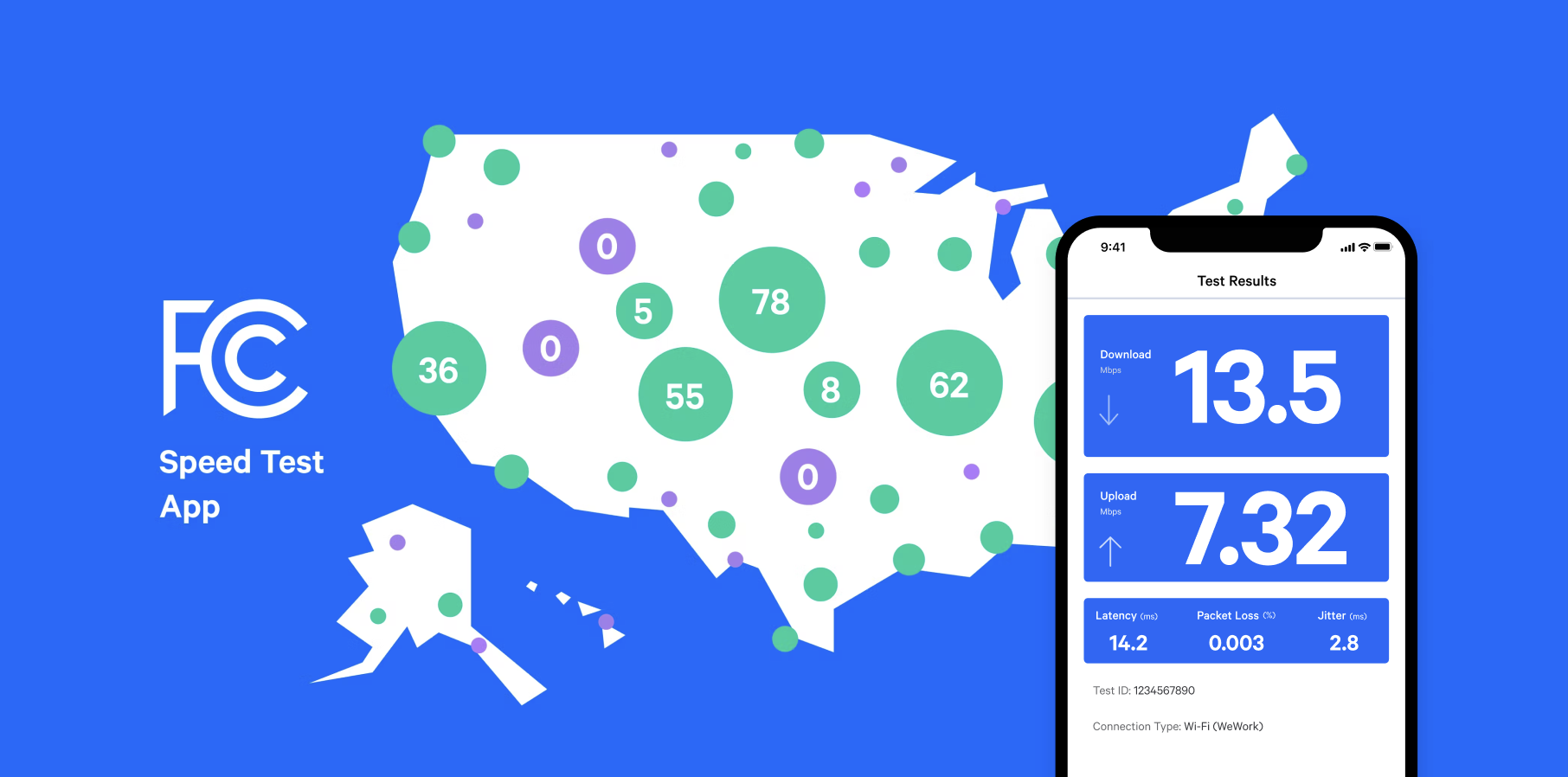
The recent shift to remote work and studying exposed internet access inequality in the US. The FCC (Federal Communications Commission) Speed Test App allows citizens to submit mobile broadband speed test samples to improve internet coverage maps and help government regulators keep ISPs accountable. The app will launch in the US first, and later for any regulator who wants to audit internet performance.
To help regulators understand national mobile broadband performance, I designed a Challenge test for users to submit real-world on-the-ground cellular performance data. Users can also run a simple anonymous speed test to independently verify the service they are receiving from their provider.
My role
The project team comprised a project manager, iOS and Android developers, and myself as lead designer. We collaborated with FCC stakeholders, including the legal team, to meet strict government guidelines.
I delivered the design of the app, led discovery, research, ideation, created high-fidelity Figma prototypes, ran usability testing, and handed off designs to development.
Research
Competitor analysis
We tested the most popular speed test apps (8 apps, 16 criteria) to understand what works and what doesn't.
Strengths:
- Transparency when requesting data and permissions (SpeedCheck)
- Focus on main functionality, fast and simple interfaces (Ookla, Fast)
- No payment or ads, independent of ISPs (OpenSignal, Fast)
Weaknesses:
- Cluttered UI and accessibility issues (Ookla, Speed Test Master)
- Lack of onboarding (all apps)
- Disruptive ads (SpeedCheck, Speed Test Master)
- Hidden costs to the user (SpeedSmart, OpenSignal, Ookla)
Opportunities: Privacy first, transparent data use, filling the market gap for reliable, independent speed tests.
User research
We conducted 12 unmoderated, structured interviews via UserTesting.com to understand behaviors, motivations, and needs of potential users.
Key insights:
- Most users keep mobile data on all the time → consider background or scheduled tests.
- Users distrust carriers, rarely seek help → app should build trust and show clear benefits.
- Users face low speed, poor coverage, and unreliable service → highlight solutions in app design.
- Familiarity with existing tools → follow familiar patterns for better learnability.
Prototyping and usability testing
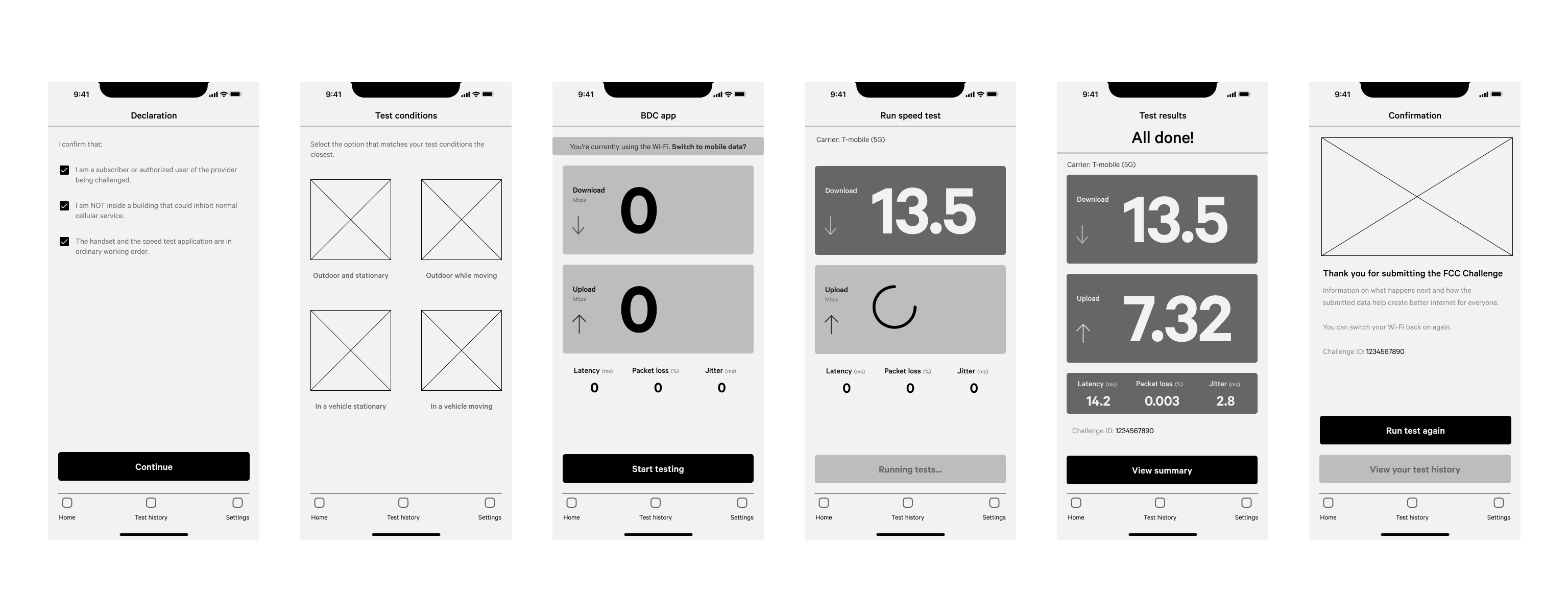
Based on research findings, I designed user flows that prioritised value, trust, and positive reinforcement.
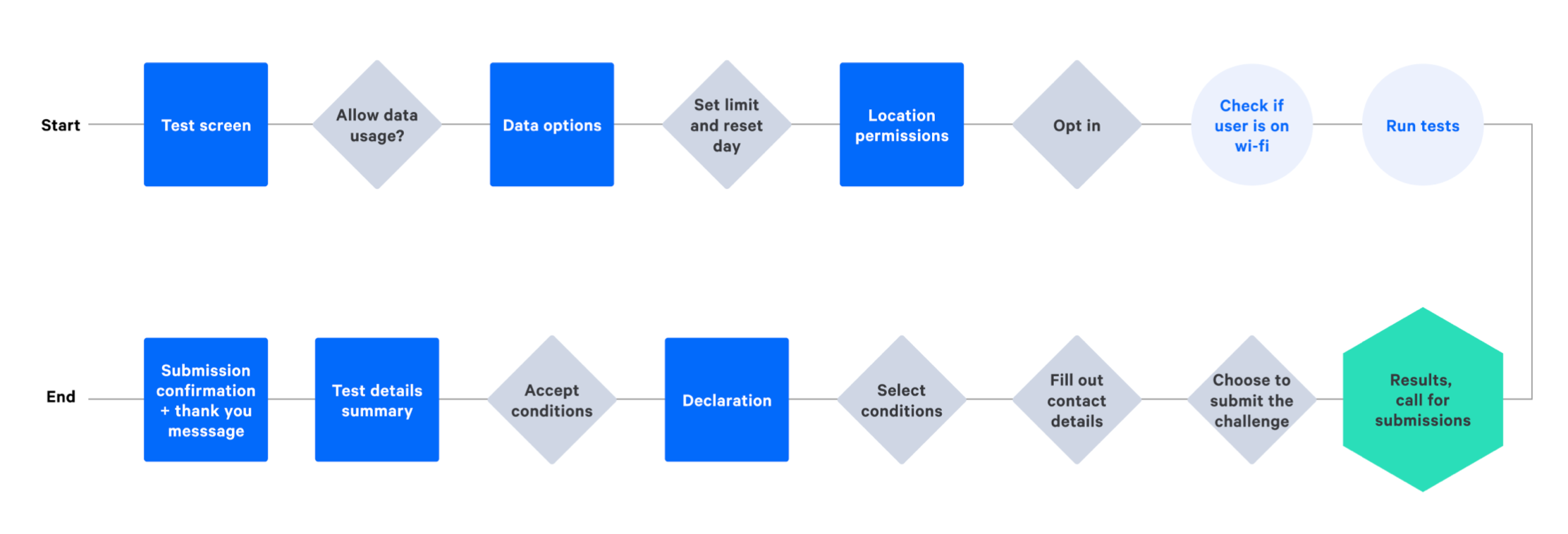
The initial low-fi prototype has been tested and iterated to identify and fix potential usability issues. As the potential user base is based in the United State, I tested the design remotely with 15 participants using the UserTesting.com platform. I have identified that the delineation between Challenge and Speed Test was not clear enough in the first iteration and made improvements to the home screen.
Final design
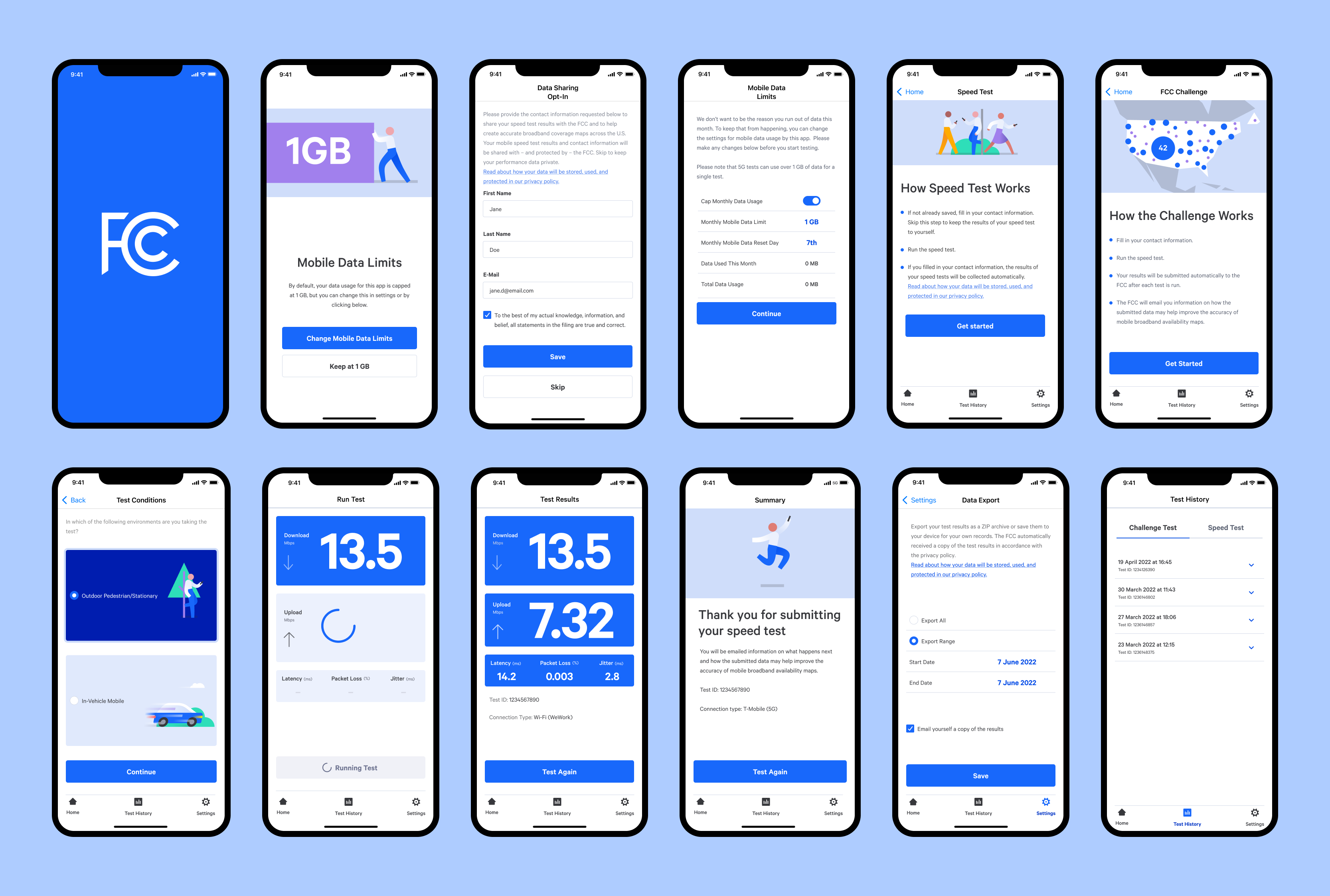
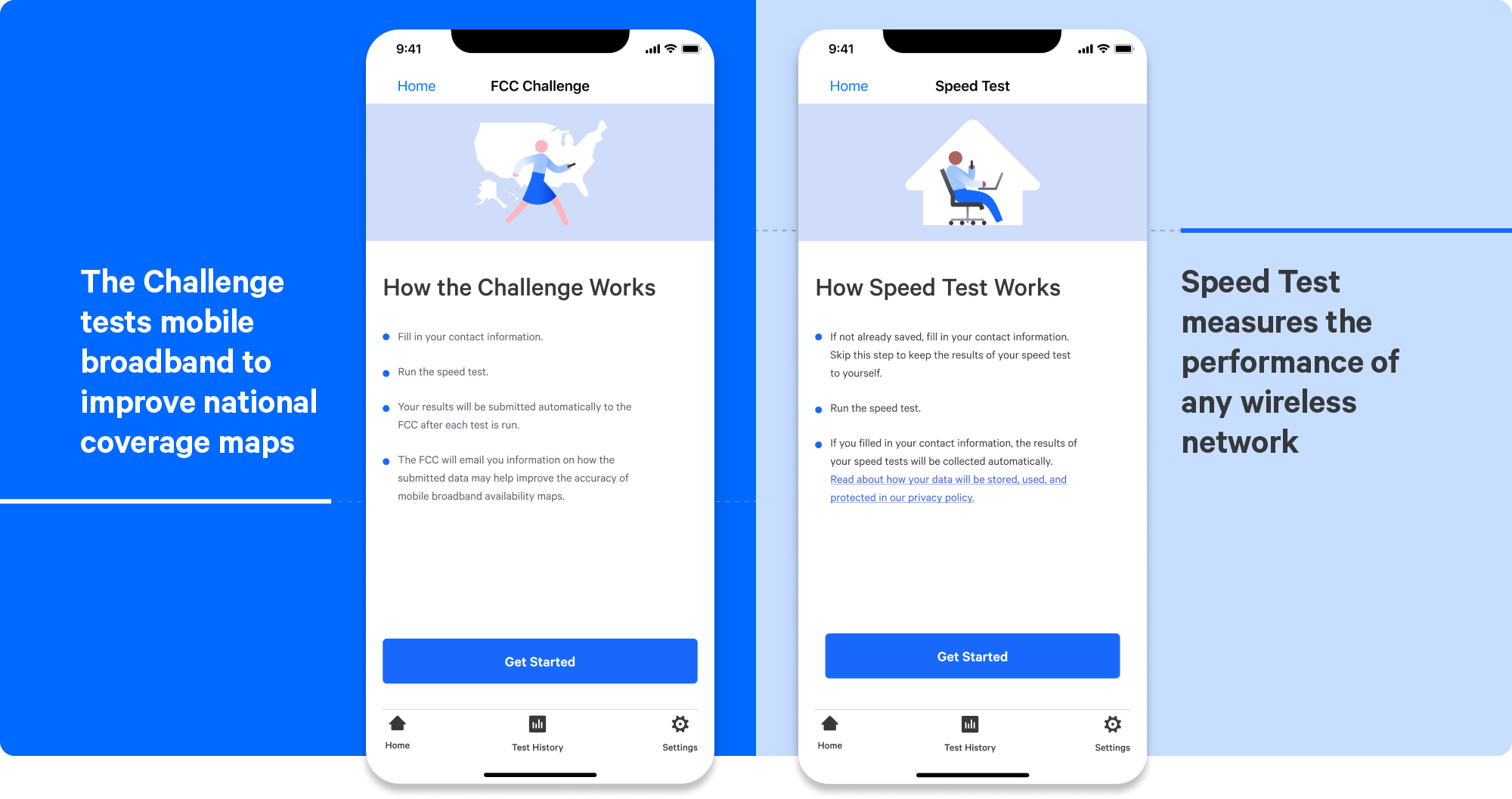
The FCC app allows users to run speed tests privately and submit Challenge Test data. The app is privacy-first, and no personal data is used for marketing. The Challenge Test empowers citizens to improve the National Broadband Map.
What makes the FCC app different to any other speed test app?
Much like any other speed test application (such as Ookla, Fastly, etc), it allows users to run a speed test to independently verify the service they are receiving from their provider but contrary to other apps, it has user data privacy at its core. No data is used for marketing purposes or sold to third parties. The unique feature is the Challenge Test. Choosing this option asks for the citizen to opt in so data can be collected and shared. This new feature focuses on collecting the test results so that the FCC can use them to build maps and challenge providers. Citizens can also use this feature to challenge their provider directly if they aren’t satisfied with their service.
Impact and future
The app is available to download in the US App Store on iOS and Play Store on Android. In the first 2 days, we observed over 30k downloads and high user engagement with over 5min average session lengths.
Impact on SamKnows: Strengthened trust and global recognition, positioning us for similar government collaborations.
Impact on FCC: Improved accuracy of National Broadband Map via citizen-submitted challenges.
Impact on the world: Empowers citizens and governments to hold ISPs accountable, improving broadband equity globally.
Future: The app is live in the US App Store and Play Store. Early adoption shows 30k+ downloads in 2 days with high engagement. We plan to monitor usage and iterate for global government adoption.